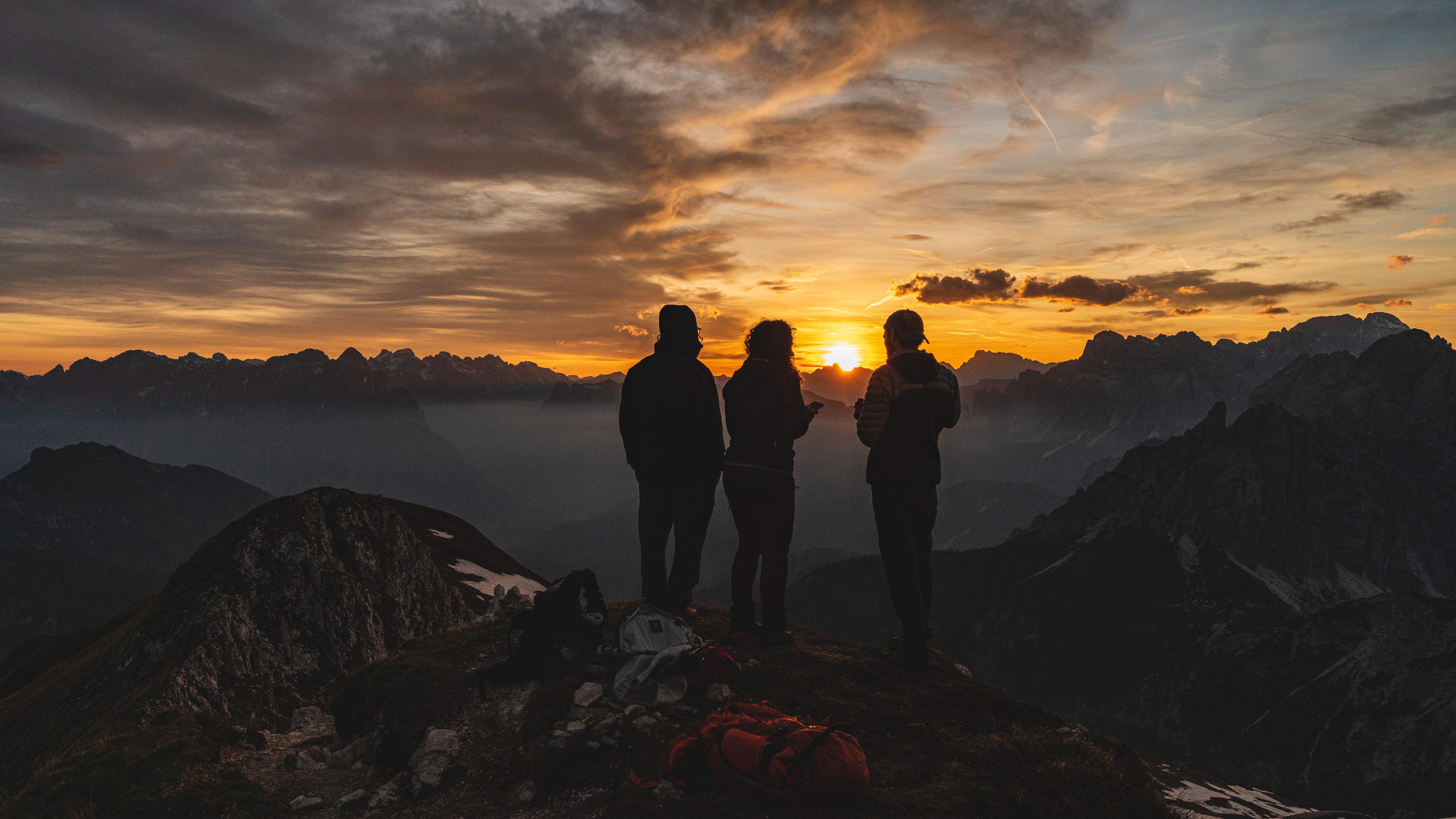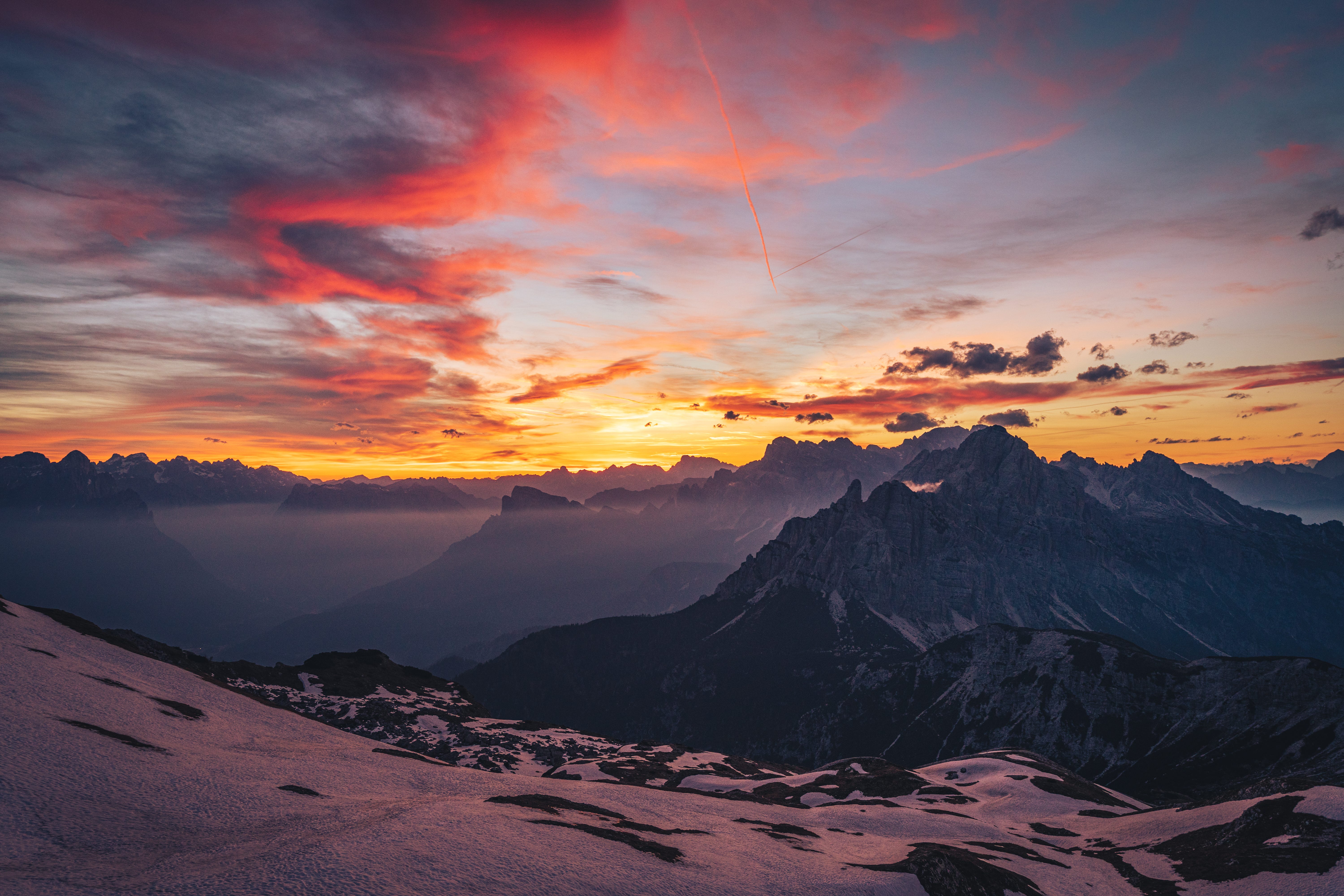
I’ve been doing this for many years now.
Waking up early. Walking without a clear goal. Waiting for light that might never come.
At some point, I stopped asking myself why.
It simply became part of who I am.
That morning, I was standing still again, looking up.
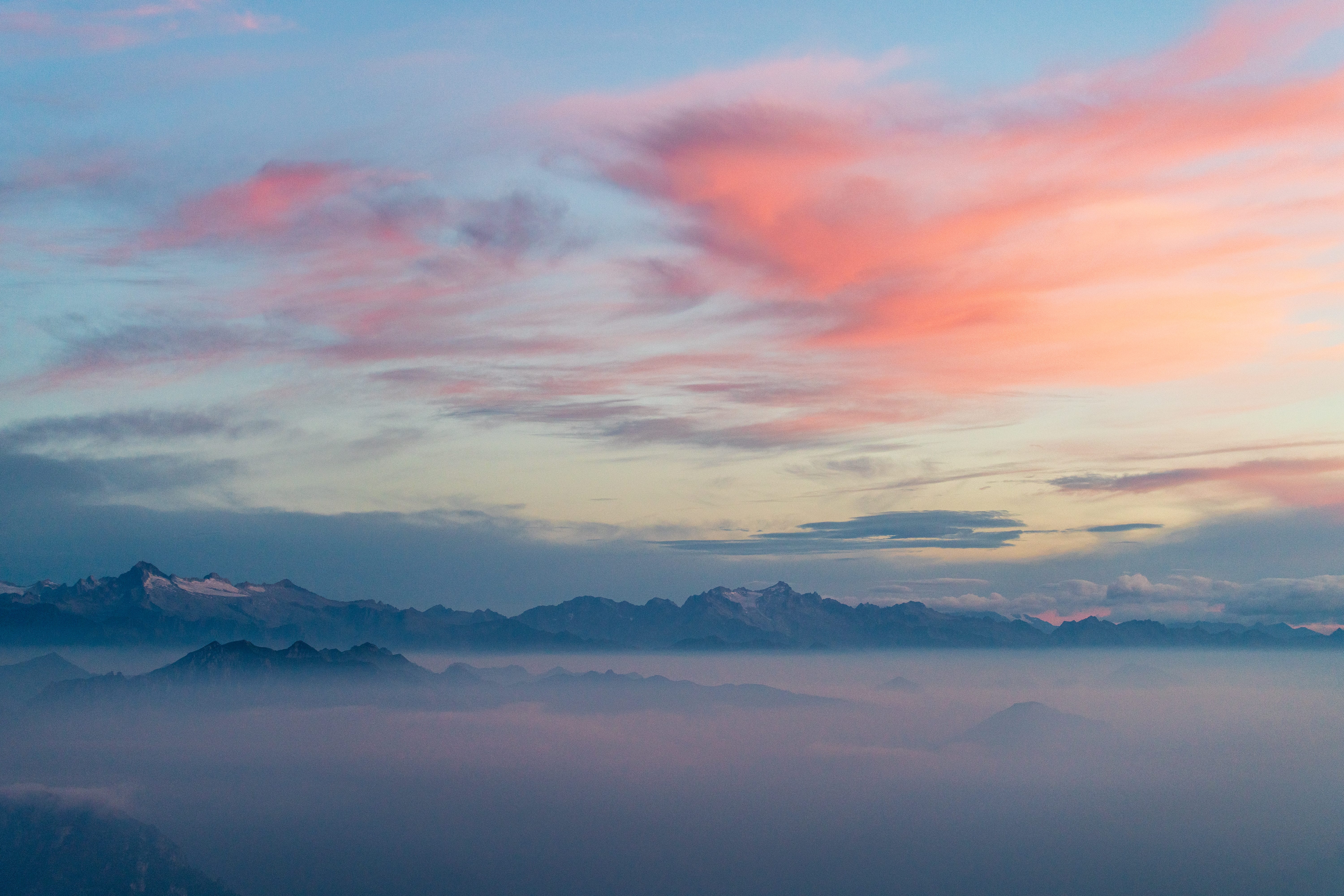
High above the mountains, thin cirrus clouds stretched across the sky — fragile, fleeting, almost accidental. They weren’t impressive in the usual sense. No dramatic storm, no burning sunrise. Just quiet lines of ice and air, slowly changing shape.
I didn’t reach for the camera immediately.
I’ve learned that the most important part happens before the photograph — before the decision to press the shutter. It’s the moment when you ask yourself whether what you’re seeing is worth staying for.
The light arrived gradually.
Not as an event, but as a transition. Pale whites softened into pinks, then into barely-there oranges. For a few minutes, those cirrus clouds felt like northern lights misplaced — subtle, restrained, almost shy.
It was easy to miss.
And years ago, I probably would have.
When I was younger, I chased moments.
I wanted the mountain to give me something: a photograph, a story, proof that the effort had been worth it. I moved fast, collected experiences, stacked memories like trophies.
Somewhere along the way, that changed.
Now I walk more slowly.
I return to the same places. I wait longer than I should. I accept that most mornings will offer nothing extraordinary — and that this is perfectly fine.
What keeps me coming back isn’t the image itself.
It’s the act of paying attention.
That light didn’t last long.
No climax. No spectacle. Just a brief alignment of clouds, color, and silence. I took a few photographs, but the most important thing I carried away wasn’t stored on a memory card.
It was the quiet confirmation that I’m exactly where I need to be.
This is why I still do this after all these years.
Not to chase peaks or destinations, but to remain receptive. To allow small, fragile moments to shape me — slowly, almost invisibly.
Photography became a consequence of that process, not the goal.
The mountains became teachers rather than backdrops.
And I became someone who values presence over results.
This is what The Lightbound Path is about.
Not extraordinary adventures, but ordinary moments seen with care. Not answers, but attention. Not speed, but direction.
I am still walking.
Still waiting.
Still learning how to see.
And when the light comes — even briefly — that is enough.